
LED Screen Installation Guide
We provide professional LED Screen Rental Services in Toronto and across the GTA for conferences, corporate events, trade shows, exhibitions, product launches, galas, concerts, sporting events, festivals, weddings, and live productions. With 23+ years of event production experience, we plan each LED installation around the venue, screen dimensions, audience sightlines, stage design, structural approach, power, video workflow, and production schedule.
Our capabilities include fine-pitch indoor LED walls, outdoor LED displays, Mobile LED Trailers, Kinetic Video Walls, Sphere LED Walls, LED posters, video processing, cameras, IMAG, presentation switching, media servers, signal distribution, professional audio, lighting, and live streaming. LED installation is more than assembling panels. The support method, positioning, power, signal path, processing, testing, and on-site operation must work as one coordinated event system.
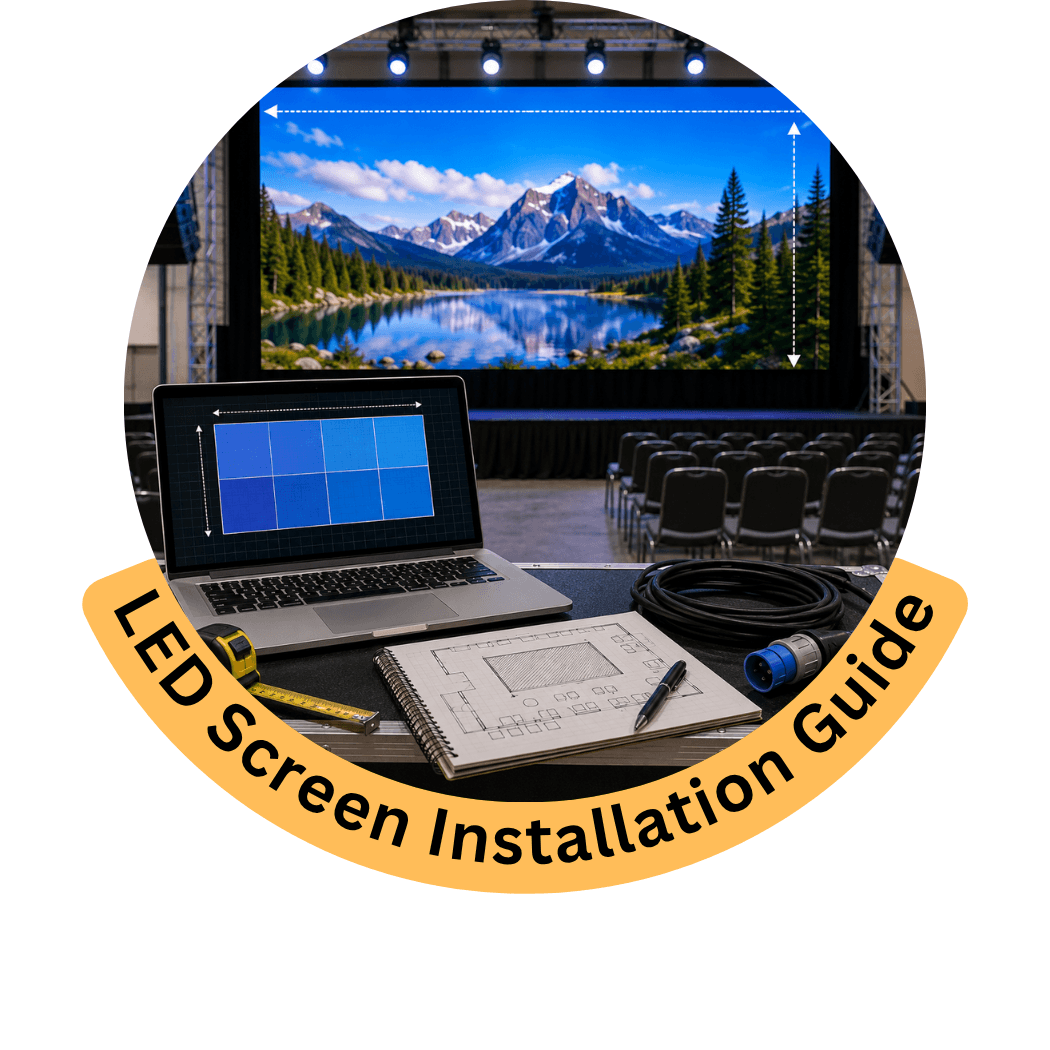
1. How Is an LED Screen Installed for an Event?
The installation process depends on the LED screen size, selected LED product, venue, stage design, audience layout, and approved support method.
A typical workflow is:
Site Review → System Design → Equipment Delivery → Support Setup → LED Assembly → Power & Signal → Processing → Testing → Content Check → Event Operation
We determine the installation method before equipment arrives so the LED system can be integrated efficiently with the rest of the event production.
| Installation Factor | What We Evaluate | Why It Matters |
|---|---|---|
| Screen Dimensions | Width and height | Determines cabinet quantity and support requirements |
| Screen Weight | Complete LED system load | Influences structural planning |
| Venue | Room, stage and site conditions | Determines practical installation options |
| Audience Layout | Viewing positions and sightlines | Determines screen location and elevation |
| Support Method | Ground-supported, freestanding or approved rigged | Defines installation approach |
| Power | Required electrical capacity | Supports reliable operation |
| Signal | Video routing and cable distances | Connects control to the display |
| Processing | LED mapping and source management | Creates the correct image canvas |
| Access | Load-in route and working area | Influences installation logistics |
| Schedule | Setup, testing and rehearsal time | Determines production workflow |
2. How Do We Determine the Right LED Installation Method?
We do not select an installation method from screen size alone.
We evaluate:
LED wall dimensions
Total system weight
Stage dimensions
Venue ceiling height
Audience sightlines
Available floor space
Structural conditions
Screen elevation
Venue requirements
Production design
Load-in access
Installation schedule
Ground-Supported LED
Ground-supported LED walls use an appropriate support system from the floor or stage level.
They can be useful when:
Suitable floor space is available
Rigging is unnecessary or unavailable
The screen can be positioned behind or beside the stage
The production requires a conventional stage LED wall
Freestanding LED
Freestanding configurations can work for smaller displays, exhibition environments, breakout spaces, branding installations, and selected event applications.
The exact support system depends on the LED product and display dimensions.
Truss-Hung LED
A truss-hung LED wall suspends the display from an approved overhead support system.
This can provide:
Clearer floor space
Greater screen elevation
Scenic integration
Improved sightlines
Large-stage positioning
Rigged installations require appropriate structural planning, approved rigging infrastructure, and qualified personnel.
3. How Do We Plan the LED Wall Position?
Screen position affects audience visibility, stage design, camera shots, installation, and the complete event experience.
We evaluate:
Audience → Stage → LED Position → Screen Elevation → Viewing Angles
Horizontal Position
The LED wall may be:
Centred behind the stage
Positioned beside the stage
Used as two side screens
Integrated into scenic elements
Installed within an exhibition booth
Positioned around an event space
The correct location depends on how the audience is distributed.
Screen Elevation
A screen installed too low can be blocked by:
Presenters
Attendees
Stage furniture
Scenic elements
Cameras
Production equipment
We determine the required elevation from the audience sightlines and event layout.
Viewing Angles
For wide rooms, a central LED wall may not provide ideal visibility for every attendee. Supplemental screens can sometimes provide better coverage than making the main screen excessively large.
4. How Is a Ground-Supported LED Wall Installed?
A ground-supported system is built from an appropriate structural base rather than suspended from the venue ceiling.
The exact installation varies by equipment, but the workflow can include:
1. Position the Support System
The support structure is positioned according to the approved stage and event layout.
2. Assemble the LED Cabinets
LED cabinets are connected in the required rows and columns to create the planned screen dimensions.
3. Secure the Display
The LED wall is integrated with the appropriate support system according to the equipment and structural design.
4. Connect Power
Power is distributed across the LED cabinets according to the calculated electrical plan.
5. Connect Data & Signal
Data and video signal paths are connected between the LED system, controllers, processors, and production control.
6. Configure the LED Canvas
The processor is mapped to the actual physical cabinet layout.
7. Test the Complete Display
We check image mapping, cabinet operation, content, signal stability, and the complete production workflow before event operation.
5. How Is a Truss-Hung LED Wall Installed?
A truss-hung LED wall requires more coordination because the display becomes part of the venue’s rigging and structural plan.
Planning can include:
LED wall dimensions
Complete display weight
Rigging hardware
Truss configuration
Approved support points
Venue requirements
Screen elevation
Power cable routing
Signal routing
Installation sequence
Qualified rigging personnel
Rigging Coordination
The LED system must be coordinated with other suspended production elements such as:
Lighting
Audio
Scenic elements
Projection equipment
Banners
Other video displays
Screen Assembly
Depending on the approved installation plan and LED system, cabinets are assembled and integrated with the support structure using the appropriate installation procedure.
Final Position
The completed display is positioned at the planned elevation and alignment before final system configuration and testing.
The exact rigging method must follow the approved structural and venue requirements for the specific production.
6. How Do We Install LED Screens at Trade Shows and Exhibitions?
Trade show LED installation requires coordination with booth dimensions, show-floor rules, neighboring exhibits, electrical service, installation schedules, and attendee circulation.
We review:
Booth footprint
Maximum build height
LED dimensions
Closest viewing distance
Structural design
Power location
Content requirements
Show-floor access
Installation window
Dismantle schedule
Ground-Supported Exhibition LED
A ground-supported or appropriately integrated display can work well where the booth provides sufficient footprint.
Structure-Integrated LED
LED walls can also be incorporated into a larger booth or scenic structure where the design and approved engineering allow it.
Suspended LED
Where approved rigging is available, an LED display may be suspended to increase visibility and preserve booth floor space.
Trade show installation should be planned early because the display can affect booth engineering, electrical orders, content dimensions, and overall exhibit construction.
7. How Do We Install Outdoor LED Screens?
Outdoor installation requires additional planning around the site and environmental conditions.
We evaluate:
Outdoor-rated LED equipment
Screen dimensions
Support configuration
Ground conditions
Screen elevation
Environmental exposure
Expected weather
Power distribution
Cable routing
Audience barriers
Equipment access
Production control location
Outdoor Ground-Supported LED
A modular outdoor LED wall can be installed using an appropriate support system designed for the planned production conditions.
Stage-Integrated Outdoor LED
For festivals and concerts, the display may be coordinated with a larger stage system.
This requires integration with:
Stage structure
Cameras
Lighting
Audio
Video control
Power
Signal distribution
Mobile LED Trailer
A Mobile LED Trailer provides an alternative to building a conventional modular LED wall.
Where site access and event requirements are suitable, the trailer can provide a faster deployment method with an integrated display platform.
8. How Do We Connect Power, Data, and Video Signal During Installation?
Once the physical LED wall is assembled, the display must be connected to the production system.
A simplified workflow is:
Event Power → Power Distribution → LED Cabinets
and:
Presentation / Cameras / Playback → Video Switching → Video Processing → LED Controller → LED Wall
Power Distribution
We calculate electrical requirements from the actual LED product, cabinet quantity, processing equipment, and supporting production systems.
LED Data
Data connections distribute image information across the LED cabinets according to the configured screen map.
Video Signal
The video processor receives program sources and maps them to the native LED canvas.
Sources can include:
PowerPoint
Keynote
Videos
Graphics
Media servers
Cameras
IMAG
Live streams
Sponsor content
Signal Distribution
For multiple or distant displays, signal distribution is planned between production control and each LED destination.
The physical installation is not considered complete until power, data, processing, sources, and the final LED canvas have been configured and tested together.
9. How Long Does LED Screen Installation Take?
Installation time depends on the LED wall size, number of displays, installation method, venue access, structural requirements, power, signal distribution, and complete production scope.
A simple indoor LED wall can require substantially less setup time than a large conference system with multiple screens, cameras, IMAG, audio, lighting, and live streaming.
A typical production sequence is:
Load-In → Support Setup → LED Assembly → Power & Data → Video Processing → Content Configuration → System Testing → Rehearsal
Larger LED Walls
Larger displays generally require:
More LED cabinets
More structural components
Additional power distribution
More signal cabling
Longer assembly time
More system testing
Multiple Screens
A production using a main LED wall plus side or supplemental displays requires additional installation and signal-distribution time.
Rigged Installations
Truss-hung systems require coordination with rigging schedules and other overhead production equipment. These installations should be incorporated into the overall venue production schedule rather than treated as an independent LED setup.
10. How Do Video Processing, Cameras, and IMAG Affect Installation?
A professional LED installation is not complete when the physical panels are assembled.
If the event uses cameras, IMAG, presentations, videos, or multiple sources, the complete video production system must also be installed and tested.
A typical workflow can include:
Presenter Laptops → Presentation Switching
Cameras → Video Switching
Media Servers / Playback → Video System
Then:
All Sources → Video Processing → LED Controller → Main LED + Supplemental Displays
Video Processing
Processors are configured around:
LED native resolution
Physical screen layout
Aspect ratio
Source resolutions
Custom content zones
Scaling
Multiple display destinations
Cameras & IMAG
Camera installation can include:
Camera positions
Cabling
Video switching
Preview monitoring
Communications
IMAG layouts
Signal routing
Multiple LED Screens
When different screens need different content, we configure the signal path so each destination receives the correct source.
11. How Do We Coordinate LED Installation With Audio, Lighting, and Staging?
LED installation frequently happens alongside other event production departments.
Coordination can include:
Staging
Rigging
Lighting
Audio
Scenic production
Cameras
Electrical services
Internet and streaming
Venue operations
Installation Sequence
The order of installation matters.
For example, a ground-supported LED wall may need to be positioned before certain scenic or stage elements restrict access.
A truss-hung LED display may need to be coordinated with lighting and audio equipment sharing the overhead production environment.
Shared Production Areas
Power, cable routes, control positions, backstage areas, and equipment access should be coordinated between departments.
Planning these requirements before load-in can reduce conflicts during installation.
12. What Do We Test After the LED Screen Is Installed?
After physical installation, we test the complete LED and video system before event operation.
LED Cabinet Check
We inspect the completed display for correct cabinet operation and alignment.
Screen Mapping
The physical cabinet configuration is mapped correctly within the LED control system.
Image Test
We verify that test content appears correctly across the entire canvas.
Resolution & Scaling
We confirm that presentation, video, graphics, and other sources are correctly scaled to the native LED resolution.
Colour & Brightness
The display is checked for consistent visual output appropriate to the event environment.
Signal Testing
We test the complete path from production control to the LED display.
Source Testing
Depending on the event, we test:
PowerPoint
Keynote
Video playback
Graphics
Media servers
Cameras
IMAG
Sponsor content
Live-stream sources
Backup Workflow
Where the production includes backup sources or redundant signal paths, these are also checked before the event.
13. How Do Venue Access and Load-In Affect LED Installation?
Venue logistics can significantly affect installation time and equipment planning.
We review:
Loading dock access
Freight elevators
Door dimensions
Service corridors
Stage access
Floor protection requirements
Installation hours
Venue labor requirements
Electrical access
Rigging schedule
Equipment storage
Strike schedule
Loading Dock Access
Large LED systems can involve substantial equipment. Efficient loading access can affect how quickly equipment reaches the installation area.
Freight Elevators
For ballrooms and event spaces above or below loading level, elevator dimensions and availability can influence equipment movement.
Limited Installation Windows
Some Toronto and GTA venues may provide restricted load-in periods. The equipment, crew, and installation sequence should therefore be planned around the available production window.
Trade Shows
Exhibition installations can require additional coordination with booth contractors, show management, electrical services, and other production teams.
14. What LED Screen Installation Mistakes Do We Help Prevent?
LED installation problems often begin during planning rather than during physical assembly.
Selecting Screen Size Before Reviewing the Venue
A screen may fit the stage dimensions but conflict with ceiling height, sightlines, support requirements, or other production elements.
We evaluate the venue and production layout before finalizing the display.
Choosing the Installation Method Too Late
Ground-supported and truss-hung systems have different structural, space, labor, and scheduling requirements.
The support method should be determined early.
Ignoring Screen Weight
The complete LED system includes more than the visible display surface. Structural planning must consider the actual equipment configuration.
Underestimating Power
LED panels, processors, switching, cameras, playback, and control equipment all require appropriate electrical planning.
Ignoring Signal Distance
Production control may be located far from the LED wall. Signal routing should be determined before equipment is positioned.
Installing Before Confirming Content
Custom and ultra-wide LED walls require proper content mapping. Knowing the presentation and video formats before installation helps us configure the correct canvas.
Leaving Testing Until the Event Starts
Assembly completion is not the same as production readiness.
Time should be available for processing, source testing, content checks, cameras, IMAG, and rehearsal where required.
15. What Information Do We Need to Plan an LED Screen Installation?
Clients do not need to determine the installation method themselves. We can recommend the appropriate approach from the venue and event requirements.
| Information | Why We Need It |
|---|---|
| Venue / Location | Establishes installation environment |
| Event Date | Determines production schedule |
| LED Wall Size | Determines cabinet and support requirements |
| Indoor / Outdoor | Determines equipment and installation approach |
| Stage Dimensions | Establishes available display area |
| Ceiling Height | Helps determine screen elevation and installation options |
| Audience Layout | Helps establish sightlines |
| Installation Preference | Identifies ground-supported or rigged requirements |
| Venue Rigging Information | Required when overhead installation is considered |
| Available Power | Determines electrical planning |
| Load-In Access | Helps plan equipment movement |
| Cameras / IMAG | Determines video production requirements |
| Supporting AV | Coordinates audio, lighting and other systems |
| Event Schedule | Establishes setup, testing, rehearsal and strike timing |
If detailed technical information is not yet available, the venue, event date, approximate LED size, stage dimensions, audience size, and event type provide a useful starting point.
16. What Do We Verify Before Finalizing an LED Screen Installation?
Before installation is finalized, we verify that the physical display, support system, power, video workflow, and venue logistics work together.
| We Verify | What We Confirm |
|---|---|
| Screen Dimensions | Correct width and height for the production |
| LED Configuration | Correct cabinet layout |
| Screen Position | Appropriate stage and audience placement |
| Screen Elevation | Suitable audience sightlines |
| Support Method | Appropriate planned installation approach |
| Structural Requirements | Coordinated for the selected configuration |
| Venue Requirements | Installation complies with applicable venue procedures |
| Power | Required electrical capacity and distribution |
| Signal Routing | Practical route between control and LED system |
| Video Processing | Correct native canvas and source mapping |
| Cameras & IMAG | Correct camera and live-video workflow |
| Load-In Access | Equipment can reach the installation location |
| Production Schedule | Sufficient setup and testing time |
| Technical Crew | Appropriate installation and operating personnel |
| System Testing | Complete LED production checked before use |
The final installation plan should coordinate LED cabinets, support, positioning, power, processing, signal distribution, cameras, content, venue access, testing, and technical operation as one complete event production system.